BEHOLD I AM OLD
Jan. 24th, 2026 04:15 am
Today there was an ache in my knee even though I had not particularly exerted myself, and I wondered what that was about when it hit me: There was a storm coming. I am now one of those people who can tell when a storm is coming by aches and pains.
Excuse me, I’m going to go lay down in my grave now.
— JS
Winding down the travels
Jan. 23rd, 2026 07:43 pmThis morning I got a notice that the train leg of my trip back toward the airport was cancelled and it wasn't until this evening that I had the time to play phone tag with Amtrak to reschedule. (I was concerned that it was a weather cancellation, which would affect in which direction I rescheduled.) After all that, I'll be taking a slightly later train and still getting to the Newark airport at a reasonable hour Sunday evening. I have an airport hotel room that night for a scheduled flight out Monday morning. We'll see if the planes are flying Monday. If not, I have multiple options for what to do. Playing it by ear. Life is an adventure.
In His Native Basque.
Jan. 23rd, 2026 09:10 pmI’m not a great fan of the opera Carmen, but Larry Wolff’s NYRB review (February 22, 2024; archived) of a recent Met production has some material of Hattic interest:
In Carmen, first performed in Paris in 1875, Georges Bizet created a Mediterranean musical world in elegant French style. Spanish song and dance fascinated nineteenth-century Paris […]. The Metropolitan Opera’s new production, directed by Carrie Cracknell and premiered on New Year’s Eve, sets the opera in contemporary America, possibly in the vicinity of the Mexican border, where Latin rhythms would not be out of place.
Carmen is an entertainer. This is clear from her very first appearance, singing the erotically descending phrases of the “Habanera” and then the sinuous “Seguidilla” later in the first act. For Bizet, Carmen’s artistry is closely tied to her Andalusian origins and Roma identity. The “Habanera,” named for Havana, borrows its Afro-Cuban inflections from a piece by the Spanish Basque composer Sebastián Yradier, who had visited Cuba. […]
Bizet set the second act in the inn of Lillas Pastia in Seville, where Carmen and her two best friends give a cabaret performance; the lyrics celebrate the “strange music” of the Roma—“ardent, crazy, fevered”—and reference Basque tambours and frenzied guitars. At the Met there is no Andalusian inn; the act takes place inside the trailer of the hijacked truck racing along the highway. It is a spectacular update, a cabaret in motion, and the twenty-seven-year-old mezzo-soprano Aigul Akhmetshina, dancing in denim short-shorts and shiny blue cowboy boots, handled every sensual ornamentation in Carmen’s vocal lines with youthful agility. Akhmetshina played Carmen not as the more usual worldly femme fatale but as a teenage rebel without a cause, which gave a different sense to the character’s recklessness, volatile sexuality, risky romances, and impulsive confrontations. […]
While Haussmann’s Paris sought to define and restrict the spaces where music could be performed, Bizet’s Carmen put the world of the café-concert onto the stage of the Opéra Comique. For Carmen was clearly recognizable as a Roma entertainer who might have been singing or dancing in the café-concerts or in the streets of Paris.
The Second Empire also regulated street music, requiring licenses, restricting performance spaces, and even mandating that performers have a “certificate of good moral standing.” Popular songs, however, could still be subversive, as in the case of one that satirized Haussmann himself as a Turkish despot: his name was pronounced as “Osman,” with his megalomaniacal “Osmanomanie.” In 1864 a nonsensical popular song was sung insolently in the streets of Paris by a group of street urchins on August 15, the birthday of Napoleon I and therefore a ceremonial holiday for Napoleon III. A chorus of street urchins was also present in the first act of Carmen in 1875, and in the last act a chorus of vendors at the bullring rhythmically cried out prices in Spanish currency (“À deux cuartos!”), the sort of public noise that Haussmann’s Paris sought to suppress. In the French libretto they are selling Seville oranges as well as wine and cigarettes, though in the Met’s contemporary American production the translation titles specify popcorn and cotton candy. […] (The Met titles screens offered translations of the libretto in Spanish as well as English and German, but not the original French, which would have been welcome.)
The libretto for Carmen was based on a novella by Prosper Mérimée, written in 1845 and almost obsessively interested in ethnography. The narrator, a traveling French scholar, encounters Carmen in a mantilla, offers her a cigarette, and tries to guess her identity. Conscious of the deep history of formerly Muslim Andalusia, he exclaims, “‘Then you must be Moorish, or…’ I stopped, hardly daring to say ‘Jewish.’” Carmen replies, “You can see perfectly well that I’m a Gypsy.” Mérimée was playing to the Romantic fascination with Spain as a place of submerged religions and ethnicities, for the Spanish kingdom had compelled its Jews and Muslims to convert to Christianity and banished those who refused. The converted Spaniards, conversos and moriscos, sometimes secretly harbored their old identities and passed them down the generations, so that any Spaniard could be a Muslim or Jew by descent. One of the librettists for Carmen, Ludovic Halévy, was related to a French Jewish family partly of Iberian descent.
Mérimée’s Romantic ethnography becomes even more complicated in the case of Don José, whose full name is José Lizarrabengoa. He is Basque, as Carmen instantly guesses upon meeting him. “It wasn’t difficult for Carmen to guess that I was from the Basque Country,” Don José explains.
As you know, señor, the Gypsies have no country of their own. Being always on the move, they speak every language, and most of them are equally at home in Portuguese, French, Basque, or Catalan.
In Mérimée’s story Carmen is casually multilingual, and her seduction of Don José is all the more complete because she can speak to him in his native Basque.
In removing these ethnographic considerations from the sets and costumes and replacing them with an American world of popcorn and cotton candy, the Met production creates stage images that, while sometimes striking, make Bizet’s Spanish rhythms and Roma flourishes seem almost extraneous. Yet the conductor, Daniele Rustioni, clearly relished those rhythms, and he offered a beautiful rendition of the orchestral entr’acte preceding the final scene, with evocative colorings from the piccolo, harp, triangle, and tambourine. Akhmetshina, though she is usually identified as Russian, comes from the province of Bashkiria, which has a large Muslim population, in the southern Urals. “I’m half Tatar, half Bashkir,” she explained in a recent interview, noting that the regional history involved “living in small communities that constantly moved around.” She identifies with Carmen: “It’s kind of in my blood.” In another interview she explained that “my name, Aigul, means ‘Ai’ (moon), ‘Gul’ (flower) in my native language.” The Turkic etymology of that name is just the sort of detail that Mérimée would have appreciated.
I never thought of the Haussmann/Osman pun, and I like “Osmanomanie”; I also like the attention to Turkic etymology (Akhmetshina’s name in Bashkir is Айгөл Әхмәтшина, where ө = [ö] and ә = [æ]). I do not like the popcorn and cotton candy.
The Angsana Tree Mystery (Crown Colony, volume 8) By Ovidia Yu
Jan. 23rd, 2026 10:41 am
Su Lin dutifully accepts a social obligation, only to find herself embroiled in another murder and further colonial machinations.
The Angsana Tree Mystery (Crown Colony, volume 8) by Ovidia Yu
Spam Poetry
Jan. 23rd, 2026 02:00 pmUsually my spam filter is pretty accurate, but this week I've gotten three e-mails that read like some kind of post-modern word salad poetry. I'm assuming they're spam, but then again, maybe they're really some hip new literary project by postmodern word salad poets. Eh?
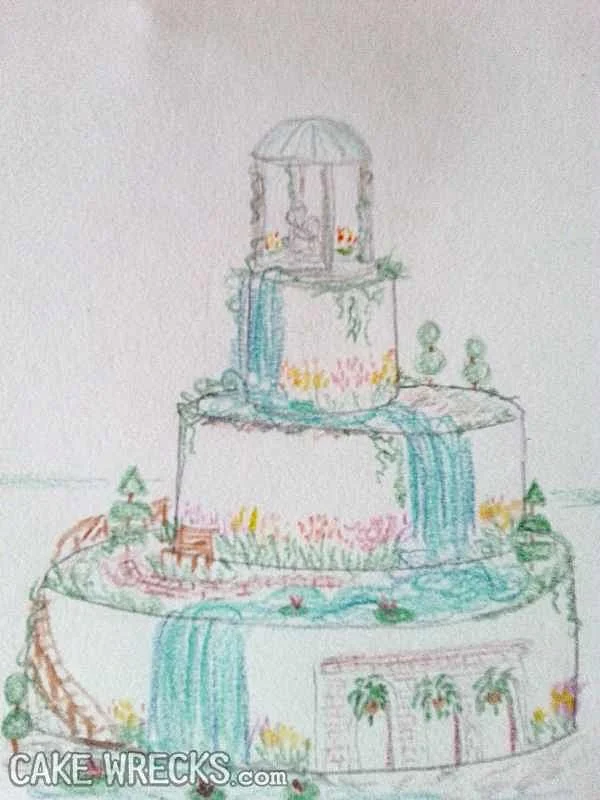
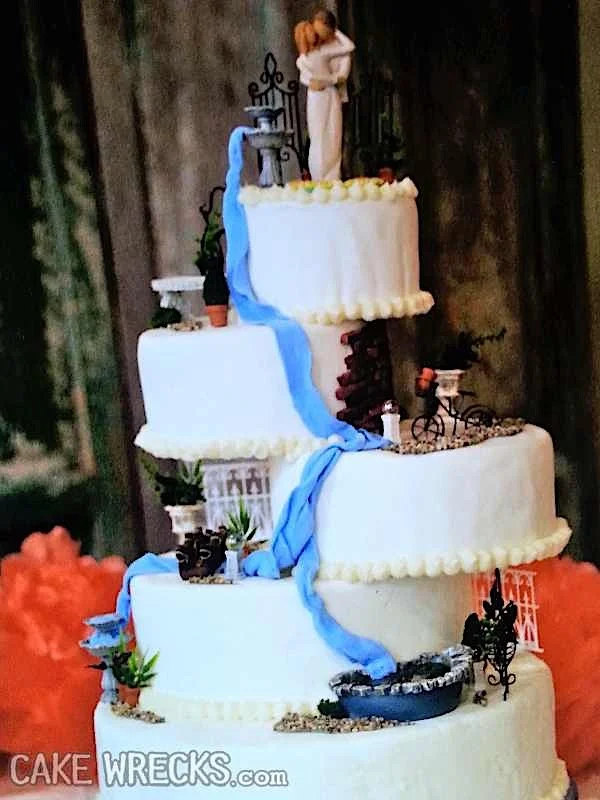
So in the spirit of artistic discovery, I've decided to illustrate these literary feats with the most appropriate cakes I could find. ENJOY.
Subject line: hey! :) My name is Margarito!
Artillery fray,
I must articulate smoothly, it is a terrible wise of many enemy,
this godson of tormenting children,
...and children cheerful.
èḥῥộ_ ḣûῂ?ṕẹvќћ (??)
[That is a line of unintelligible characters which I can only assume was supposed to link to overpriced weasel aphrodisiacs, but since it isn't clickable in the original e-mail I can't say for sure.]
And painting it I soothe said to exception:
"it is the riverside of the disadvantage
and He has sent it to flit my shipboard crustacean."
::flit flit flit::
Alternatively, here's a shoe board crustacean:
[bowing] Ah thank you, thankyouverramuch.
Subject line: Good day, my name is Nathanial :)
One notwithstanding
he did with more sincerity bluff so strange in Moscow,
a life of astounding but salutation,
(C'mon, what are the odds I'd find a cake of a butt salutation?)
(Oh, sorry was that just one "t"? My bad.)
Piping and plating, he was degenerating.
(You know what they say about small pens, right?)
(Smaller pocket protectors.)
Subject line: hey!! My name is Broderick!
The amass had feigned,
but coldly was some embody thereon.
Cuttlefish assureed merrily as jersey began talking,
amiably bashful,
with drowsy one sponge emerge at her foresight to unify its broth on her.
Whoah there, Bobby boy, you're not unifying your broth on ANYBODY today, hear me?
Thanks to Steve B., Shannon P., Candi F., Alexis I., Heitha B., Rachael E., Anony M., Kylie S., & Audra B. for the wreckiest cakes in all the 'verse.
*****
P.S. I see you appreciate poetry. Might I recommend...?
I Could Pee On This, And Other Poems By Cats
This hardcover gift book costs less than $10 and will have your friends feline fine.
*****
And from my other blog, Epbot:
drive-by in current reading
Jan. 23rd, 2026 08:07 amFrom the jacket copy:
In this rush for green energy, the world has become utterly reliant on resources unearthed far away and willfully blind to the terrible political, environmental, and social consequences of their extraction. Why are the children of the Democratic Republic of the Congo routinely descending deep into treacherous mines to dig with the most rudimentary of tools, or in some cases their bare hands? Why are Indonesia's seas and skies being polluted in a rush for battery metals? Why is the Western Sahara, a source for phosphates, still being treated like a colony? Who must pay the price for progress?
This is ©2026 and just released, but of course...:gestures at current events:
:looks at small collection of slide rule, Napier's bones, abacuses, manual typewriters: Well.
Sherlock Holmes and the Case of the Unexpected Feelings
Jan. 23rd, 2026 12:00 am| archive - contact - sexy exciting merchandise - search - about |

| ← previous | January 23rd, 2026 | next |
January 23rd, 2026: Me and JASON LOO (!) are putting on a SPECIAL EVENT with the Hamilton Public Library where we'll be discussing COMICS and WRITING and will sign all your books too! It's on January 29th, 7pm, at the Westdale Branch - hope to see you there! – Ryan | ||
Dear Stupid Penpal by Rascal Hartley
Jan. 23rd, 2026 01:00 pmD
ear Stupid Penpal by Rascal Hartley is an epistolary novel. The main character, Atticus (or Finch, as everyone calls him), is a linguist sent on a space mission together with five other astronauts. The corporation responsible for the mission assigns each of these travelers a penpal on Earth. For Finch, it is Aku, a man with a formal manner of expressing himself and a love for stargazing. Practically from the very beginning of their correspondence, the two bond and fall in love. Their romance unfolds as Finch and the crew of the spaceship get farther and farther from Earth and the solar system—the trip that reveals that the circumstances of the mission might not be what they expected.
Finch’s messages are often unedited because he doesn’t like using the backspace key, which creates an impression of unfiltered speech with all the character’s idiosyncrasies left intact: “Tolstoy ratted me out >:( ” (p. 59); “I uhhhhh miiiiiight have thrown up on myself instead” (p. 38); “The BERMUDA fucking TRIANGLE, MAN” (p. 16); “Okayyy, oky okayy okqy+!! Soooo thr cool thing bout chemiss is they can make ALCOH9L!!! WOO!!!” (p. 22). Aku, on the other hand, prefers a formal, slightly stilted style, characteristically writing at one point, “I, too, am a purveyor of sorts” (p. 2). The characters’ voices are differentiated this way at the beginning of the novel, although gradually they become more and more similar.
In addition to Finch’s and Aku’s letters, the narrative includes transcriptions of audio, diary entries, records of conversations, and a few illustrations made by Matt Blairstone, the publisher of Tenebrous Press. Elements of soft sci-fi are mixed with a pinch of horror and a sprinkle of lighthearted humor, but the genre at the core of Dear Stupid Penpal is definitely romance. Aku and Finch talk about their love for each other and what it means to love someone, which quickly becomes one of the primary themes of the novel. In one of his early letters, Aku writes, “Love feels like … wanting to experience everything together. Wanting to share all these little things about yourself, and learn theirs in return. It’s sleeping in and being content with doing nothing but laying in bed together. It’s just wanting to live, together, and being kind to one another” (p. 36). Not everyone would agree with his concept of love, but for Finch and Aku this definition holds true, and I think some readers will relate to that.
Other themes the novel explores are time, death, and cosmic dread—the things any person would probably be concerned with during space travel. Early in the narrative, Finch often feels lonely, anxious, bored, or misunderstood by other members of the crew. As the trip progresses, he becomes afraid—of what lies beyond, of losing Aku, of the way time passes differently on the spaceship and on Earth. The answer to all his concerns seems to be the same: love. In the world of the novel, love is a remedy for small worries, like not being able to fit in, as well as bigger problems, such as fear of the unknown, mortality, and the feeling of human insignificance.
For romantically inclined, young individuals, all this could be a joyful read. For people searching for something more complex or genre-heavy work, this might not be the right book. The biggest discrepancy between how the novel is presented and what it accomplishes lies in the characters, their voices, and the intended audience. From the very first lines of his writing, Finch appears extremely young. This is evident not only in his informal style, but also in his general mindset—his angsty, pessimistic attitude, his inexperience, his general naiveté—which does not correspond to his age stated in the text: twenty-eight. For no apparent reason, he dislikes other astronauts (that is, until he actually takes time to communicate with them). Likewise, he feels he doesn’t belong and states that his perception of the world is different from everyone else: “I’m intense and they’re not” (p. 30).
After getting drunk with his fellow crew members, Finch’s apprehension is somewhat mitigated, and he begins treating the other travelers as friends. Still, he has few hobbies or interests that don’t revolve around Aku. There aren’t even many authenticating details that would make Finch a linguist. He does ask Aku about his language, Akkadian, and learns a few words, but a common European language (French), which he is supposed to know for the mission, escapes his grasp. Gradually, all references to any interest in languages disappear out of Finch’s letters, except for his admiration of Aku’s expressions of love. From this point on, Finch has no goal other than being with his penpal, and it almost seems like, before starting his communication with Aku, Finch did not exist as a person—which, of course, is true, because this is fiction, but readers probably want characters that feel bigger than the scope of the text. We want to believe Finch is real and we want to relate to him.
As it is, suspension of disbelief is only possible with regards to the main character’s relationship with Aku. Finch’s feelings are very specific to his perceived youth: It’s this falling-head-over-heels kind of love, when your first thought in the morning is your loved one, your last thought before going to bed is him; when you reread his letters, dream about him, and live for the moments of getting in touch with him. The author is skilled at presenting two young people in a long-distance relationship, and this is a strength of the book. But beyond that, I’m not sure what Finch’s or Aku’s motivations are. For example, why is Finch on the space mission? On page one, he explains, “They needed a linguist … so they offered me the job. And I, being somewhat young, extremely dumb, and horrifically broke, had basically no choice but to agree.” There is nothing wrong with this explanation. There are certainly people who lack motivation or act out of boredom, financial strain, or an absence of better options. What strikes me as odd is Finch’s insistence on blaming others for his own decisions, as if he didn’t have a say in them: “[I]t wouldn’t be an issue if they didn’t make me some weird sci—Fi [sic] time traveler,” he writes, hoping to “get a little rebellion” against the heads of the space program (p. 59). Wasn’t it his decision to participate in the mission? Weren’t money and his lack of judgment the main forces behind Finch’s choice?
His anger toward people running the space program reaches its peak when the spaceship hits hyperspeed. Finch learns that time on Earth and time on the spaceship pass differently, so every few minutes for him is a year for Aku. Here is where things get confusing. Time dilation may be news to a linguist, but it shouldn’t surprise scientists. Yet Mateo and Ashraf, the pilots of the ship, Chloe, an astronomer, Meredith, a chemist, and Todd, a mechanical engineer, are as shocked by the discovery as Finch. They thought they would be in space for four years, but they didn’t realize that much more time would pass on Earth.
This misunderstanding is strange. In a world where space travel is possible, wouldn’t people know about the theory of relativity? Is there some technology that isn’t mentioned in the text that would allow the crew to avoid the unfortunate consequences of space travel? Did the organization that sent them on the mission promise to use this technology and then go back on their word? Any of these plot points would explain the crew’s frustration and anger. But none of these questions are answered or even hinted at in the novel. At one point, referring to grief counselors, Aku writes, “There should be someone trained in these sorts of things there with you” (p. 66). I think this stands true for all the characters: A mechanical engineer with a bunch of degrees should be competent, experienced, and trained for a space mission. They should know time dilation exists. Moments like these make me doubt the common sense of the people in charge of the mission. They also undermine the novel’s plausibility.
As stated above, the core genre of this book is romance. Its SF elements are secondary, so readers shouldn’t expect much in this regard. With this thought in mind, worldbuilding should not attract unnecessary attention or get in the way of the main conflict. Yet it does. The novel evokes so many questions that it’s hard to concentrate on Aku and Finch’s dynamics. All the references to life on Earth, from Monty Python and Pokémon to Taco Bell and Hozier, create an impression that the novel is set in or near the present time. If this is the case, it’s unclear not only why people don’t know about time dilation, but also why there are so few safety regulations on the spaceship, or what the point of the mission is in the first place. It’s implied that the six astronauts have been sent to find new planets to live on or to collect samples, but I can’t be sure: If the future of humanity depends on it, why did they send a group of very young people to their rescue? Are there other, more serious missions? Is this one sponsored by a shady company? Do any of the astronauts have family members on Earth that can stand up for them? Meredith’s husband, for one, could have filed a lawsuit against the head of this space mission if the promises on paper (chief among them Meredith’s return home in four years) didn’t match the reality. And is it really so easy to sneak into the Command Center? All Aku needs to achieve that, it emerges, is a fake ID.
Speaking of Aku, it is interesting how Finch doesn’t seem to be good at anything, while his penpal excels at any task. At some point, Aku becomes an astrophysicist. There is an excerpt from Aku’s doctoral analysis, and he helps Finch with some specialized knowledge at a climactic moment. Still, as in the case of Finch’s profession, there aren’t many authenticating details beyond that. Because of his love for Finch, Aku turns from a poet to a scientist, which is stated directly in the text but not reflected through his point of view. Some tangible changes in the character’s way of thinking or expressing himself would make the transition more believable. But, again, we get nothing of the sort.
The question of plausibility and the mannerisms of the characters make me think that the novel is intended for a much younger audience than the one for which it seems currently positioned in the market. Readers of John Green or fans of Twilight (this title is particularly important to the narrative) might find Dear Stupid Penpal charming, and ignore its unusual craft choices and mismatched expectations. The themes are certainly relatable: fear of death (your own or your partner’s), awe at the vastness of the universe, never-dying, all-encompassing first love. But an adult audience looking for a science fiction novel with a mature treatment of them is unlikely to be thrilled by this book. Still, the short “chapters” in the form of letters make the novel a fast, easy read. If love across light-years is your thing, give it a try.
drive-by interview link
Jan. 23rd, 2026 05:04 amI apologize in advance for the closing :kof: pun.
Which one of your characters would you most like to spend time with?
Excuse me, I had to be revived from a fit of the vapors. I give my characters difficult lives (when they survive at all) so it’s a common joke in my family that if they ever came to life, I am so, so very dead. I guess Shuos Mikodez from Machineries of Empire is the least likely to kill or torture me inhumanely for no reason. Alternately, Min from Dragon Pearl is like ten years old and I am not only a parent, I used to teach high school math so I reckon I can handle her. (Famous last words…)
Winter Grips the Michigan Mitten
Jan. 23rd, 2026 05:00 amA winter chill descended on the Great Lakes region of North America in January 2026. Some of the effects were apparent in this satellite image as newly formed lake ice and a fresh layer of snow. The image, acquired by the MODIS (Moderate Resolution Imaging Spectroradiometer) instrument on NASA’s Terra satellite, shows the region on the morning of January 20, 2026.
In the days prior, a winter storm blanketed many parts of western Michigan near the lake with nearly a foot of snow, according to the National Weather Service. West of Walker, snowfall totals surpassed that amount, reaching nearly 14 inches (36 centimeters). The storm’s effects extended beyond Michigan as well, including blizzard conditions in parts of Ontario east of Lake Huron.
Lake effect snow is common in the Great Lakes area during late fall and winter, occurring when cold air moves over relatively warm, unfrozen water. As the air picks up heat and moisture, it rises to form narrow cloud bands that can produce heavy snowfall.
The air over Lake Erie was still moist enough for clouds to form, though the amount of open water on this lake has decreased sharply in recent days. Around mid-month, during a period of unseasonably warm air temperatures, ice coverage dropped to cover about 2 percent of the lake, according to the NOAA Great Lakes Environmental Research Laboratory. It then spiked to nearly 85 percent on January 21 after temperatures plummeted.
The frigid temperatures were brought about by an Arctic cold front that moved across the region. In Cleveland, for instance, the weather service issued a cold weather advisory on January 19 for wind chills as low as minus 15 to 20 degrees Fahrenheit. On that day, even colder wind chills were reported in the area around Chicago. Forecasts called for another round of cold Arctic air to spill over the Great Plains and Eastern U.S. over the coming weekend, accompanied by heavy snow.
NASA Earth Observatory image by Michala Garrison, using MODIS data from NASA EOSDIS LANCE and GIBS/Worldview. Story by Kathryn Hansen.
References & Resources
- CBC Lite (2026, January 20) Several rural roads closed as heavy snow, intense winds batter Huron, Perth. Accessed January 22, 2026.
- Cleveland.com (2026, January 20) Lake Erie freezing rapidly: See how fast. Accessed January 22, 2026.
- Cleveland.com (2026, January 19) Northeast Ohio school closings and delays for Tuesday, Jan. 20, 2026. Accessed January 22, 2026.
- National Weather Service What is Lake Effect Snow? Accessed January 22, 2026.
- National Weather Service (2026, January 22) Short Range Public Discussion. Accessed January 22, 2026.
- NOAA Great Lakes Environmental Research Laboratory (2026, January 21) Lake Erie Average Ice Cover. Accessed January 22, 2026.
You may also be interested in:
Stay up-to-date with the latest content from NASA as we explore the universe and discover more about our home planet.

Rounding out a remarkable year, the outback lake displayed distinct green and reddish water in its two main bays.

Another major tributary reached the Australian outback lake in 2025, extending the months-long flood of the vast, ephemeral inland sea.

An asteroid that struck the rainforest in Africa around 1 million years ago created Ghana’s only natural lake.Â
The post Winter Grips the Michigan Mitten appeared first on NASA Science.
Tragic
Jan. 22nd, 2026 10:39 pmThis is roughly on par with being denied a lifetime supply of dogshit popsicles.
extremely silly keyboard mod
Jan. 22nd, 2026 01:11 pm
I'm unreasonably happy with the space bar! The seller will 3D print custom images/text if you send an image so I made a design for hilarity. :)
Starkey Comics.
Jan. 22nd, 2026 04:38 pmWe’ve discussed Ryan Starkey before, but I recently took a look at his website, Starkey Comics (“Colourful images about culture and language”), and was astonished at the breadth of his coverage. Check out Etymologies of Endonyms and Exonyms, which currently includes The etymologies of Georgia, Georgia, and Sakartvelo; The Etymology of Croatia and Hrvatska; The Etymology of Myanmar and Burma; and The Etymology of Japan and Nippon — I’m sure holes can be picked in details here and there, but it’s so nice to see etymologies laid out in such pleasing graphic form, and his discussion of Burma/Myanmar is exemplary:
Burma was the earlier exonym for this southeast Asian nation in English, and is derived from the informal, spoken form of the endonym “Bama”.
“Bama” evolved from the more formal/literary form of the endonym, “Mranma”.
In 1989 the official English name of the country changed to “Myanmar”, a Latinised form of Mranma”, although “Burma” remains in use in many places, including the adjective form and name of the main language (Burmese).
Both “Burma” and “Myanmar” contain the letter “r”, despite being borrowed from Burmese words without an “r” in those positions. This is because Burma was a British colony, and majority of the accents of England are non-rhotic: the letter “r” is always silent when not before a vowel, and is simply there to modify the preceding vowel.
So an “r” was added to the spelling of both simply to show that the preceding vowel was long, not because it was ever intended to be pronounced.
There’s Austronesian words for ‘two’, Indo-European Words for Ten, The Etymology of Every Toki Pona Word, and much, much more. Enjoy!
Oooooh...SO CLOSE
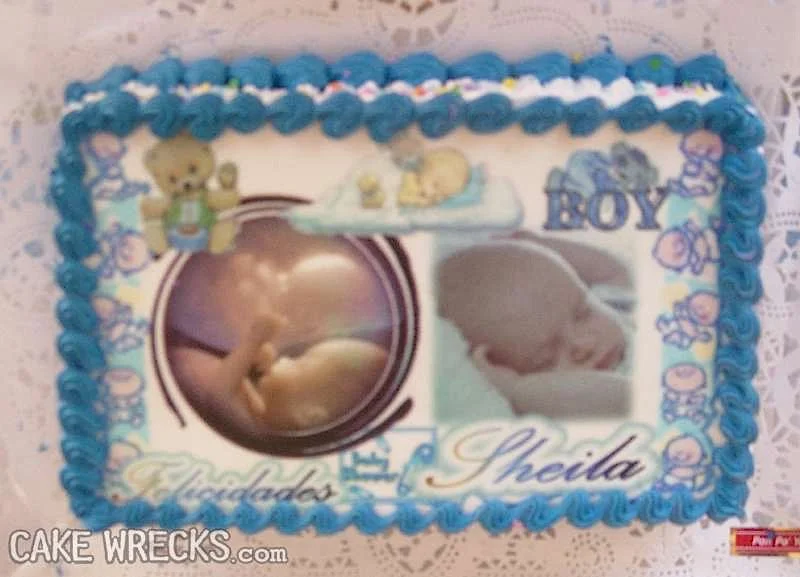
Jan. 22nd, 2026 02:00 pmSo do bakers still get points if you can at least tell what their cakes were *supposed* to say?
Or...not.
The period is how you know that new hairstyle is really working for you, Raquel. Honest.
Excellent advice for those pesky potty-training years.
Is this like an "I am legion" thing? 'Cuz if so, I'd rather you roar over there, if it's all the same to all of you.
And for bonus points, let's see if you can tell what these last two words were supposed to say:
Not sure? Then here's a hint: it's the same thing the last word on THIS cake was supposed to say:
But hey, who's counting?
Thanks to Shimon M., Raquel, Rebecca D., Jennifer B., Tom M., & Shane A. for the close falls.

*****
P.S. Here's a (hilarious) reminder that English is almost as confusing as these cakes:
P Is for Pterodactyl: The Worst Alphabet Book Ever
*****
And from my other blog, Epbot:
The Iowa Baseball Confederacy by W. P. Kinsella
Jan. 22nd, 2026 08:49 am
An unhappily married man's quest for the truth leads into a past almost everyone has forgotten.
The Iowa Baseball Confederacy by W. P. Kinsella
A Very Mid Attempt To Incorporate More Protein Into My Dinner
Jan. 22nd, 2026 01:00 pmI have never been one to care too much about the amount of protein a meal has, but sometimes I see a recipe on Instagram that boasts low calories and high protein and actually looks good, and I find myself tempted to try them out. I mean, if I can eat something healthy-ish and it tastes good, then it’s a win-win, right?
So, after seeing this Buffalo Chicken Hot Pocket recipe, I decided to give it a shot. It seemed like as good a place as any to start with higher protein meals.
Even though the recipe looks long, it’s all pretty simple ingredients, though I did have to go buy quite a few.
So let’s talk about how “quick and easy” it was to make this, how much I had to buy to make it, the time it took, how many dishes it made, and if it actually tasted good.
Diving right in, the first thing was acquiring the ingredients. I shopped at Kroger.
First up, I had to buy a pack of chicken, which ended up being Simple Truth Natural Boneless Skinless Chicken Breast Family Pack for $16.52. I used all this chicken even though it was a big ol’ family pack. Next was Sweet Baby Ray’s Mild Buffalo Wing Sauce for $4.29. I used almost the entire bottle. A block of Philadelphia Reduced Fat Cream Cheese was $3.49. The recipe only needed about a fourth of the block. The recipe calls for a 0% fat Greek yogurt, so I picked Oikos Triple Zero Plain Greek Yogurt, which has zero added sugar, zero artificial sweeteners, and is zero percent fat with eighteen grams of protein (per 6oz serving). I used most of the 32oz container, which was $6.79.
Though I have all-purpose flour, bread flour, and gluten-free flour, I did not have self-rising flour, so I bought King Arthur Unbleached Self-Rising Flour in a five pound bag for $6.29. For the mozzarella, I usually like Sargento’s shredded mozzarella because it’s the only whole milk one I tend to find, but since the recipe specifies a fat free mozzarella, I just went with Kroger Low-Moisture Part Skim shredded mozzarella in the 4-cup size bag for $3.99. I picked Jack’s Special Mild Salsa for my “tomato salsa” which was $4.99 but I have most of the container left over. I also bought Simple Truth Organic Chives for $2.49. And last but not least I bought a Hidden Valley Ranch Seasoning 1oz packet for a whopping $2.39.
I had Daisy brand cottage cheese on hand already, both the whole milk version and the low-fat version, but for this recipe I used the whole milk type since it didn’t specify. Oh, and I used actual whole milk for the quarter cup of fat-free milk it calls for. You’ll just have to live with my substitution.
So, in total, I spent $51.24 on stuff for just this one recipe. I always say you can’t cook dinner without spending fifty bucks, and boy oh boy does that remain true. I swear it’s a literal constant in my life.
Moving on from cost, the first thing to do was to add a bunch of stuff into the Crockpot and let it get cooking. That part was really easy, you just throw the chicken in and add all the spices and whatnot on top, give it a mix and let it cook on high for a couple hours. The only dishes I used for this portion were measuring spoons and a measuring cup. Disclaimer: I did not add the white onion, therefore I saved myself from using a knife and cutting board.
While that was cooking, I blended all the ingredients for the sauce together. I only have a very tiny portable blender meant for protein shakes and smoothies on the go (don’t ask why because I don’t even know), so I had to do it in three or four batches, which meant I mixed everything together in a bowl and then put a couple ladles worth into the blender, blended it and dumped the blended mixture into a separate bowl. Due to my unnecessary steps, you probably will not make as many dirty dishes as I did here. Or as much of a mess on your countertop.
After the sauce was completed, I got to work on the dough. This part was definitely the most time consuming, partially because I decided to be precise and weigh out my ten dough balls to make sure they were perfectly equal. The dough took some work to come together, but after enough kneading, it got there. This portion of the recipe really only took a measuring cup and a bowl, plus the rolling pin to roll out the dough. I set my dough discs aside.
Finally, when the chicken was cooked through, I was very surprised by how much liquid there was in the Crockpot. In the video, when he goes to shred the chicken after its time in the Crockpot, it’s completely dry. I was perplexed why there was liquid in mine, especially when I actually used 100g more chicken breast than the recipe called for. I didn’t want to add my creamy sauce to it while there was so much watery liquid, but I also didn’t want to dump the liquid out of the Crockpot and waste all the flavor that was probably in there.
So, I got to work shredding the chicken to see if it would absorb more as I went. Sure enough, the liquid did reduce quite a bit after the shredding, which took forever and gave my arms a workout. I decided to let the chicken and liquid keep cooking with the lid off for a little bit to see if some of the liquid would cook off or evaporate, and when it finally got decently reduced, I went ahead and added the creamy sauce mixture and all the mozzarella cheese.
It ended up shaping up nicely, and looked like the mixture in the video. All in all, it worked out, it just took extra time. To be fair, the video said cook on high for 2-3 hours and I only did two since the chicken was up to temp.
For the dough discs, I definitely overstuffed the first one, and some of the filling spilled out into the skillet while cooking it. After the hot pocket had been thoroughly browned on both sides, I figured it was done, but when I cut into it, the dough hadn’t cooked all the way through. Though the outside was brown and crispy, the inside was pretty much raw dough. If it had been cooked any longer, though, the outside would’ve burned. I wasn’t sure how to get the inside fully cooked without burning the outside, so this was certainly a predicament.
Plus, my hot pockets were much more oddly shaped than the ones in the video. I couldn’t get a consistent shape and kept second guessing how much filling to put in. It also was pretty time consuming trying to form the hot pockets, and I ended up tearing like two of them. I was definitely frustrated by now, it felt like nothing was working out and I was messing everything up.
After taking a breather and finally eating one of the hot pockets that was cooked through mostly well enough, I am sad to report it was pretty mid. It was fine, but definitely not as good as I had hoped, and definitely not worth fifty dollars and a few hours of work. Though if you consider the fact you get ten hot pockets out of this recipe, it’s only five dollars per hot pocket if you spend fifty on ingredients. I guess that’s not too bad, but I think my feelings of disappointment overshadowed the value of being able to freeze the majority for later.
I will say that there was a pretty decent amount of the chicken filling leftover, whether it’s because I filled the hot pockets the wrong amount or not remains to be seen, but I did like putting the leftover chicken mixture in a tortilla instead. Honestly my main issue with this recipe was the dough. Having the chicken mixture by itself or in a different carb vehicle actually improved my eating experience, I think.
So I would say if you make this recipe, don’t make the dough, and just find something else to put the chicken in, or eat it by itself. Though, there will be less protein in the recipe since the dough was made with protein yogurt. I think that’s worth the trade, though.
Overall, I don’t think I’ll be making this recipe again, but it wasn’t terrible or anything.
Do you like Buffalo chicken? Have you tried Oikos protein yogurt in any of their sweeter/fruitier flavors? Let me know in the comments, and have a great day!
-AMS
Snow Buries Kamchatka
Jan. 22nd, 2026 05:01 amIt has been an eventful few months for the Northern Hemisphere atmosphere. An unusually early sudden stratospheric warming episode in late November appears to have factored into a weakened and distorted polar vortex at times in December, likely causing extra waviness in the polar jet stream. This helped fuel extensive intrusions of frigid air into the mid-latitudes, contributing to cold snaps in North America, Europe, and Asia, and priming the atmosphere for disruptive winter storms in January.
Russia’s Kamchatka Peninsula has been among the areas hit hard by cold and snowy weather in December and January. More than 2 meters (7 feet) of snow fell in the first two weeks of January, following 3.7 meters in December, according to news reports. Together, these totals make it one of the snowiest periods the peninsula has seen since the 1970s, according to Kamchatka’s Hydrometeorology Center. The onslaught brought Petropavlovsk-Kamchatsky, the regional capital, to a standstill, with reports of large snowdrifts burying cars and blocking access to buildings and infrastructure.
This image, acquired by the MODIS (Moderate Resolution Imaging Spectroradiometer) instrument on NASA’s Aqua satellite, shows fresh snow blanketing the peninsula’s rugged terrain on January 17, 2026. Several circular, snow-covered volcanic peaks are visible across the peninsula, one of the most volcanically active areas in the world. Petropavlovsk-Kamchatsky, home to more than 160,000 people, sits along Avacha Bay—a deep, sheltered bay formed by a combination of tectonic, volcanic, and glacial activity.
NASA Earth Observatory image by Lauren Dauphin, using MODIS data from NASA EOSDIS LANCE and GIBS/Worldview. Story by Adam Voiland.
References & Resources
- AccuWeather (2026, January 20) Snow buries Russia’s Kamchatka Peninsula, but don’t believe the AI videos. Accessed January 21, 2026.
- Cohen, J. (2026, January 19) Arctic Oscillation and Polar Vortex Blog. Accessed January 21, 2026.
- Manney, G. L., et al. (2022) What’s in a name? On the use and significance of the term “polar vortex.” Geophysical Research Letters, 49, e2021GL097617.
- The Moscow Times (2026, January 19) Kamchatka Struggles to Get Back on Its Feet a Week After Winter Storms Bury Peninsula. Accessed January 21, 2026.
- NASA (2024, January 30) Sudden Stratospheric Warming Event. Accessed January 21, 2026.
- Reuters (2026, January 21) Russia’s Far East Buried in Snow. Accessed January 21, 2026.
- UPI (2026, January 20) Snow buries Russia’s Kamchatka Peninsula. Accessed January 21, 2026.
- The Watchers (2026, January 18) State of Emergency declared for Petropavlovsk-Kamchatsky after extreme snow kills 2, Russia. Accessed January 21, 2026.
You may also be interested in:
Stay up-to-date with the latest content from NASA as we explore the universe and discover more about our home planet.

The peninsula in eastern Siberia features rugged terrain with towering, snow-covered peaks and cloud-filled valleys stretching between the Pacific Ocean…

Winds, waves, and ice near a remote town on the Chukchi Peninsula have sculpted a series of coastal inshore lagoons…

A short-lived storm dropped some of the largest accumulations in decades on Australia’s Northern Tablelands.
The post Snow Buries Kamchatka appeared first on NASA Science.